
Quand j'ai conçu ma maison, je n'avais pas juste un plan en tête — j'avais une intention : que les gens qui y entrent ralentissent sans s'en rendre compte. Pas avec des règles affichées au mur, mais avec l'espace lui-même. Voici les choix qui ont guidé chaque décision.
When I designed my home, I didn't just have a floor plan in mind — I had an intention: that people who walk in slow down without noticing. Not with rules posted on the wall, but through the space itself. Here are the choices that guided every decision.
Tout a commencé par une intentionIt started with an intention
Avant les matériaux, avant les couleurs, il y a eu une question : qu'est-ce que je veux que les gens ressentent en entrant ? Ma réponse : qu'ils expirent. Que les épaules descendent. Que le rythme de la ville reste dehors, sur le pas de la porte.
Before materials, before colours, there was a question: what do I want people to feel walking in? My answer: that they exhale. That shoulders drop. That the city's pace stays outside, on the doorstep.
Cette intention est devenue mon filtre pour chaque décision. Chaque fois qu'il a fallu choisir — un luminaire, un meuble, une couleur — je me suis demandé : est-ce que ça aide à ralentir, ou est-ce que ça agite ? Simple, mais redoutablement efficace.
That intention became my filter for every decision. Each time a choice came up — a light fixture, a piece of furniture, a colour — I asked: does this help slow down, or does it agitate? Simple, but remarkably effective.
La lumière d'abordLight first
Le premier choix, ça a été la lumière — naturelle d'abord. De grandes fenêtres orientées pour capter le soleil bas de l'hiver, pour que la neige dehors fasse partie du décor intérieur. Le jour, la maison se remplit d'une clarté douce qui rend les lampes presque inutiles.
The first choice was light — natural first. Big windows oriented to catch the low winter sun, so the snow outside becomes part of the indoor scenery. By day, the house fills with a soft brightness that makes lamps almost unnecessary.
Et le soir, l'inverse : pas de plafonnier agressif, mais des points de lumière chaude, bas, qui créent des îlots de calme. La lumière du soir dit au corps : la journée est finie. J'ai voulu que la maison le dise toute seule.
And in the evening, the opposite: no harsh ceiling light, but warm, low points of light creating islands of calm. Evening light tells the body: the day is over. I wanted the house to say it on its own.
Des matériaux qui apaisentMaterials that calm
Le bois, partout où c'était possible. Pas par tradition — parce que le bois est vivant : il sent bon, il est chaud au toucher, il vieillit bien. Les matériaux naturels ont cet effet : ils ramènent les sens au présent, sans qu'on ait à y penser.
Wood, wherever possible. Not out of tradition — because wood is alive: it smells good, it's warm to the touch, it ages well. Natural materials have this effect: they bring the senses back to the present, without you having to think about it.
J'ai évité tout ce qui brille trop, tout ce qui fait « neuf clinquant ». Les surfaces mates, les textiles doux, les couleurs de la forêt et de la pierre. Une maison qui aide à ralentir ne doit jamais donner l'impression de vous impressionner — elle doit donner l'impression de vous accueillir.
I avoided anything too shiny, anything "brand-new flashy." Matte surfaces, soft textiles, forest and stone colours. A house that helps you slow down should never feel like it's trying to impress you — it should feel like it's welcoming you.
Des espaces pour ne rien faireSpaces for doing nothing
Le choix le plus important : prévoir des endroits dont la seule fonction est de ne rien y faire. Un fauteuil devant la grande fenêtre. Un coin près du feu. Le spa et le sauna, bien sûr — le rituel chaud-froid, c'est de l'architecture du repos.
The most important choice: planning spots whose only function is doing nothing there. An armchair by the big window. A corner by the fire. The hot tub and sauna, of course — the hot-cold ritual is rest architecture.
Ces espaces n'ont pas besoin d'être grands. Ils ont besoin d'être évidents : on les voit, on comprend immédiatement à quoi ils servent, et le corps fait le reste. C'est fou comme un simple fauteuil bien placé peut changer un week-end.
These spaces don't need to be big. They need to be obvious: you see them, you immediately understand what they're for, and the body does the rest. It's amazing what a well-placed armchair can do to a weekend.
Ce que j'ai volontairement laissé de côtéWhat I deliberately left out
Concevoir, c'est aussi choisir ce qu'on ne met pas. J'ai limité les écrans dans les espaces de détente — ils ont leur place, mais pas partout. J'ai évité les horloges visibles dans les chambres. J'ai dit non à tout ce qui bippe, clignote ou réclame de l'attention.
Designing is also choosing what to leave out. I limited screens in the relaxation spaces — they have their place, but not everywhere. I avoided visible clocks in the bedrooms. I said no to anything that beeps, blinks, or demands attention.
Le résultat ? Une maison qui ne vous demande rien. Pas de notifications murales, pas de distractions intégrées. Juste un lieu qui vous rend votre temps — et qui vous laisse décider quoi en faire. C'était le plan depuis le début.
The result? A house that asks nothing of you. No wall notifications, no built-in distractions. Just a place that gives you your time back — and lets you decide what to do with it. That was the plan from the start.
Et si c'était votre maisonWhat if it were your home
Vous n'avez pas besoin de construire un chalet pour appliquer ces principes. Regardez votre salon ce soir : qu'est-ce qui vous agite ? La télé allumée en fond, le plafonnier blanc, le fouillis sur la table ? Commencez par là — éteignez, baissez, rangez.
You don't need to build a chalet to apply these principles. Look at your living room tonight: what agitates you? The TV on in the background, the white ceiling light, the clutter on the table? Start there — turn off, dim down, tidy up.
Puis ajoutez un espace pour ne rien faire : un fauteuil près de la fenêtre, un coin avec une lampe chaude et une pile de livres. Pas besoin de rénover — juste de décider qu'un endroit de la maison sert au repos, et à rien d'autre.
Then add a space for doing nothing: an armchair by the window, a corner with a warm lamp and a stack of books. No renovation needed — just decide that one spot in the house is for rest, and nothing else.
C'est comme ça que j'ai commencé, moi aussi : pas avec un plan d'architecte, mais avec une intention. La vôtre peut commencer ce soir, avec une lampe et un fauteuil. Le ralentissement n'attend pas la maison parfaite.
That's how I started too: not with an architect's plan, but with an intention. Yours can start tonight, with a lamp and an armchair. Slowing down doesn't wait for the perfect house.
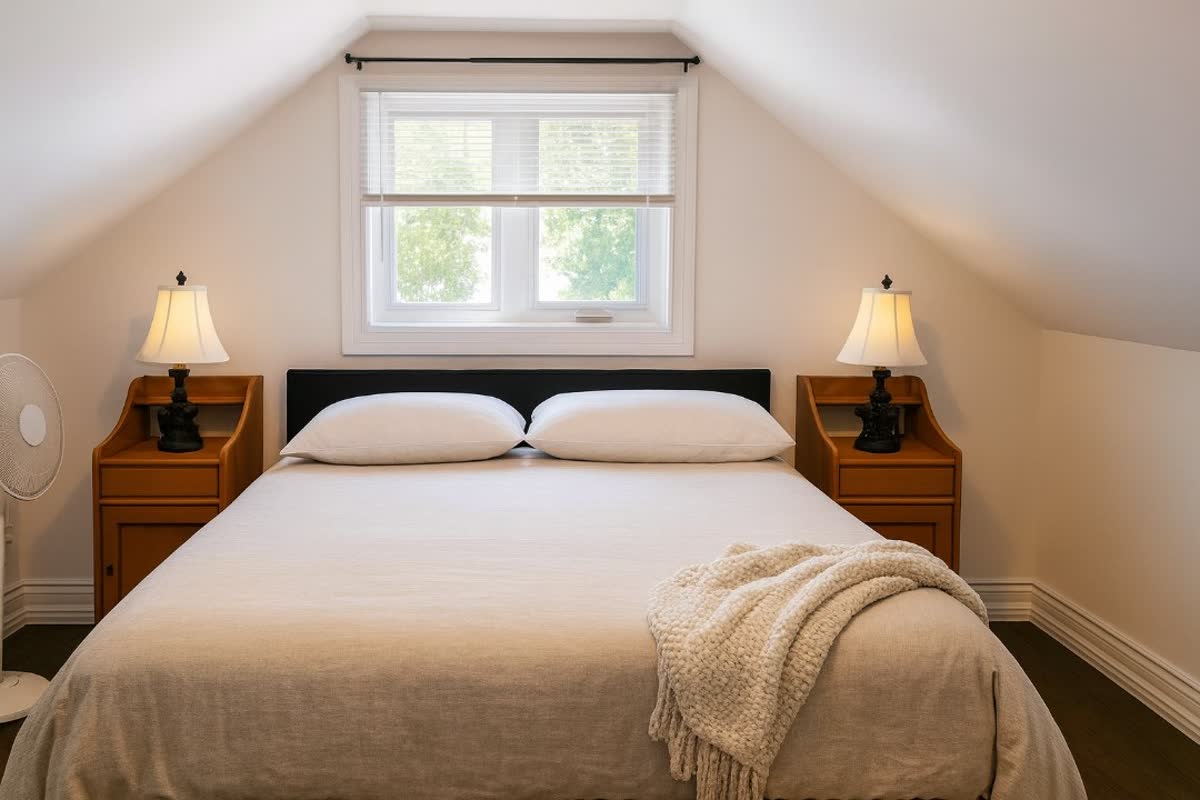
Et commencez par la chambre : c'est là que le ralentissement paie le plus. Pas d'écran qui traîne, une lampe chaude, des draps confortables. On y passe un tiers de sa vie — autant que ce tiers-là aide au repos plutôt qu'il l'empêche.
And start with the bedroom: that's where slowing down pays off most. No stray screens, a warm lamp, comfortable sheets. We spend a third of our lives there — that third might as well help rest instead of preventing it.